
A good Ohrid Macedonia Travel Guide has to start with why this small lakeside town matters: Ohrid was once home to 365 churches — one for every day of the year. At its peak in the Byzantine era, it was one of the most important seats of Orthodox Christianity in the Balkans, the location where St. Clement founded a school in 886 AD that helped spread literacy, the Cyrillic alphabet, and Orthodox faith through the Slavic world. The phrase “Jerusalem of the Balkans” was not invented by a marketing department.
The lake below the old town is an estimated 4-6 million years old with 200+ endemic species. The Ohrid trout is one of them — and it’s now protected by fishing quotas, which means the trout on the menu may or may not be genuine.
Currency: Macedonian Denar (MKD). ~60 MKD = €1. Prices from gotripzi.com and multiple sources, May 2026.
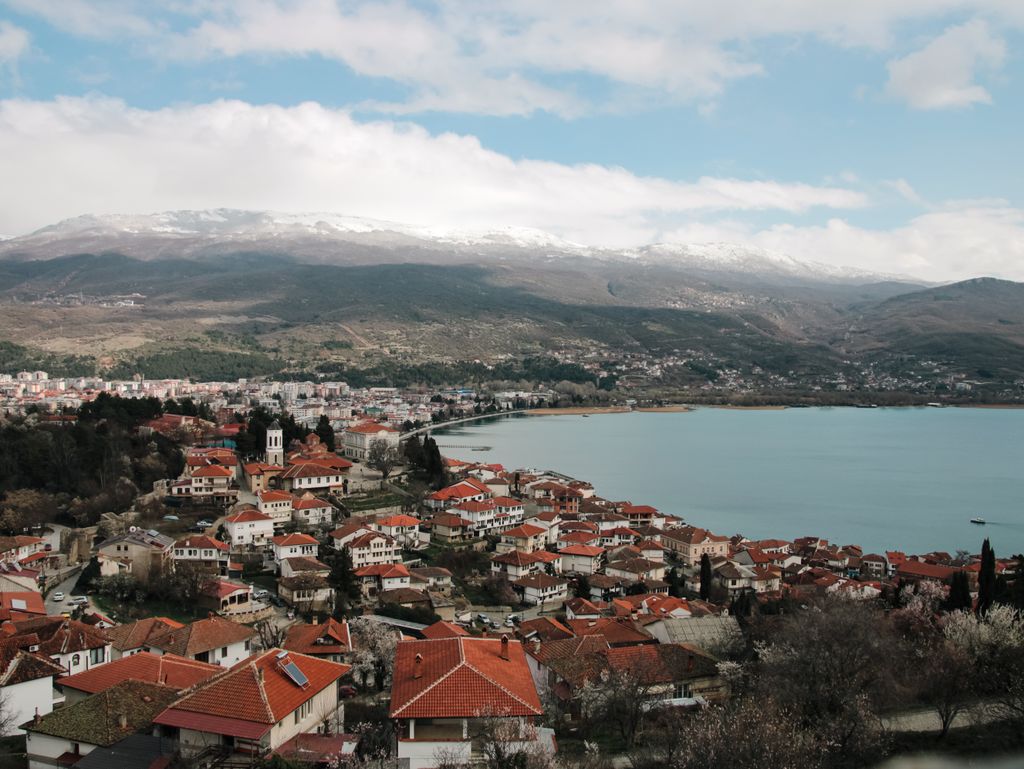
Is Ohrid Worth Visiting?
Yes. More than one day, ideally two to three nights.
Lake Ohrid is the kind of place that looks exactly like its photographs and still surprises you. The water is clear enough to count stones at considerable depth. The old town sits above the water with Byzantine church towers visible from the lake. The pace is slower than Skopje in a way that feels earned rather than sleepy.
The honest caveat: July and August are very busy. Ohrid Summer Festival brings significant crowds, accommodation fills completely, and the lakefront promenade becomes shoulder-to-shoulder. The water is at its warmest but the town is at its most crowded. May, June, and September are significantly better for most visitors.
What to Do in Ohrid
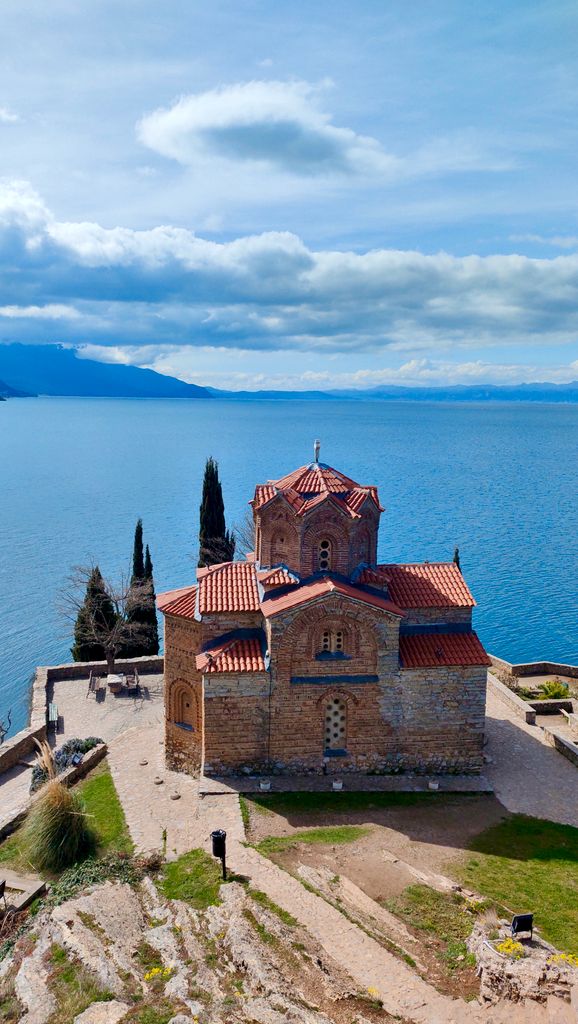
Church of St. John at Kaneo
The photograph that represents Ohrid everywhere: a small 13th-century Byzantine church on a rocky cliff above the lake, the water stretching behind it. The exterior and the cliff view are free. There is a small entry fee to go inside.
Walk from the old town along the lake path: approximately 15 minutes. Go in the morning for the best light and the fewest people. The cliff gives a view down into the lake clarity that the photographs don’t convey.
Cost: Free (exterior). Small entry fee interior (~€2 foreign).
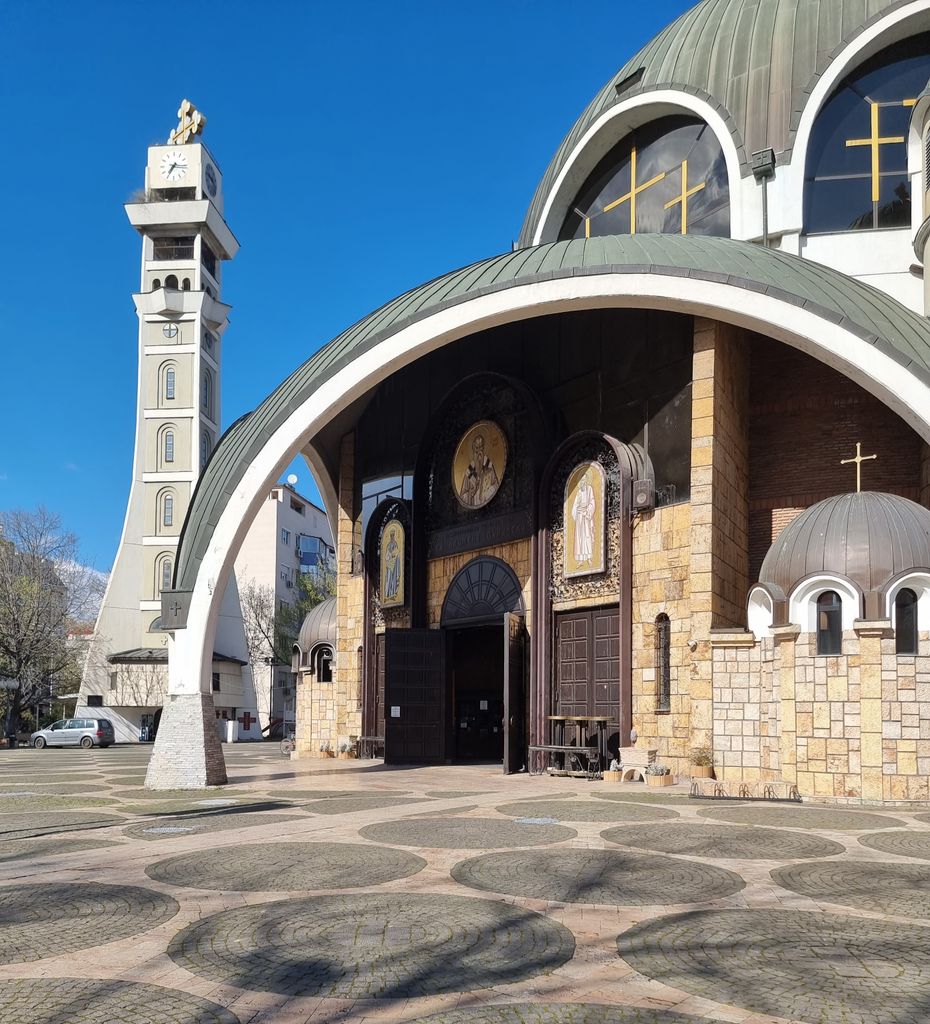
Plaošnik and St. Clement’s Church
The site where St. Clement of Ohrid built his school in 886 AD — often called one of the first Slavic universities. The reconstructed church sits over the original foundations; a viewing platform looks down into the ongoing archaeological excavation.
St. Clement (840-916 AD) was a student of Saints Cyril and Methodius, the creators of the Cyrillic alphabet. He came to Ohrid after being expelled from Moravia and spent the rest of his life building educational and religious institutions here. His work helped establish Old Church Slavonic as the liturgical language of Orthodox Christianity across the Slavic world.
Standing at Plaošnik, you’re standing at one of the specific places where Slavic literary culture was shaped.
Entry: 120 MKD (~€2) Macedonian residents; €2.50 (paper money) or €3 (coins) for foreign visitors. Have paper euros ready.
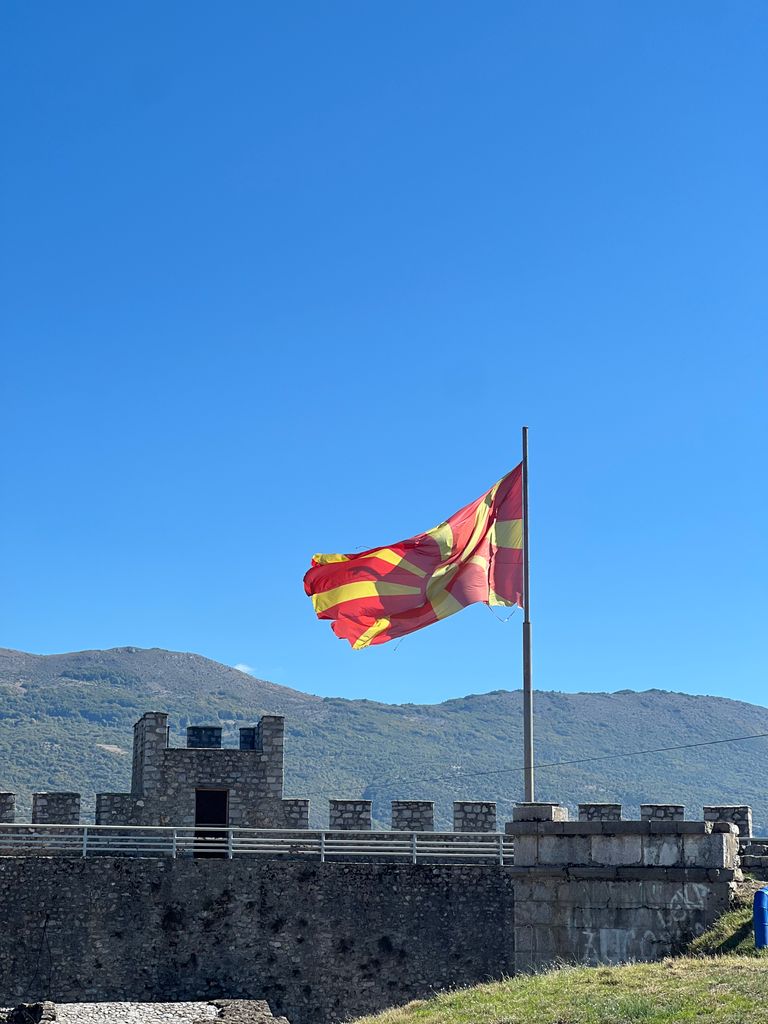
Samuel’s Fortress
The Byzantine-era fortress, rebuilt and expanded over centuries, sits above the old town on the ridge. Views over the old town rooftops, the lake, and the Albanian mountains on the opposite shore.
Entry: 200 MKD (~€3.30) adults.
Go early morning before the tour groups arrive. The fortress walls are walkable in 30-40 minutes; the views justify staying longer.
Bay of Bones
The Bay of Bones (Zaliv na Koskie) is one of Ohrid’s most distinctive sights and almost never covered properly in travel guides. A museum of a reconstructed prehistoric pile-dwelling — Bronze Age, approximately 3,500 years old, with Iron Age sections from 2,500-3,000 years ago — built on wooden stilts over the lake itself.
The original settlements were built out over the water for protection from predators and enemies. The reconstruction shows how these lake villages looked: wooden platforms, thatched structures, boats moored alongside. Around it, the clear lake water gives the installation an open-air quality nothing else in the Balkans replicates.
Reached by boat from Ohrid harbour (10 minutes, included in most lake boat tours) or by road from the south side of the lake.
Lake Boat Tour
A lake boat tour is the best way to see Ohrid’s coastline, visit Sveti Naum, and reach the Bay of Bones and the limestone cave sections of the lake. Most 2-4 hour tours cover:
- Limestone caves along the coast
- Bay of Bones (prehistoric museum)
- Sveti Naum Monastery (30km south, Albanian border)
- Swimming stop in clear lake water
Cost: 987-1,974 MKD (~€17-33) per person, depending on duration and operator. Book at the harbour or through your accommodation.
Alternatively: city bus to Sveti Naum from Ohrid bus station costs 68 MKD (~€1.15).
Sveti Naum Monastery
At the southern end of the lake, 30km from Ohrid, on the Albanian border. A 10th-century monastery above the spring source where Lake Ohrid’s water emerges from underground. Peacocks roam the monastery grounds — a detail that surprises every first-time visitor.
Entry: 154 MKD (~€2.50). Allow 1-2 hours. The spring itself, where clear water bubbles from underground into channels leading to the lake, is the specific draw alongside the monastery architecture.
National Workshop for Handmade Paper
In the old town: one of only seven workshops in the world that still make paper using the original Chinese method from the 2nd century BC. Demonstrations run during opening hours; the paper produced is sold in various forms.
This is a specific and genuine craft tradition in Ohrid, not a tourist souvenir operation. The process — turning plant fibres into sheets through traditional pressing techniques — is visually interesting even in a 20-minute visit.
Worth a detour if the old town is your afternoon. No entry fee (small donation or purchase expected).
The Ohrid Trout
Every guide says to try the Ohrid trout (Salmo letnica). Fewer say that it may not actually be available.
The Ohrid trout is an endemic species — found in Lake Ohrid and nowhere else on Earth — and is now under conservation protection with regulated fishing quotas. Some licensed restaurants serve it legally; others may offer a substitute species; some menus list it when it’s out of season.
Before ordering: ask the restaurant specifically whether it is genuine Ohrid trout, where it came from, and whether it’s currently in season. It may not be on the menu at all. This is not a criticism of the restaurants — it’s conservation working as intended.
Alternative: lake carp, eel, or Macedonian freshwater fish are all genuine local options that don’t carry the same conservation complexity.
When available: 600-1,200 MKD (~€10-20) depending on restaurant and preparation.
When to Visit Ohrid
May and June: Best shoulder season. Lake warming up (comfortable swimming by June), wildflowers on the Galičica ridges above the lake, old town quiet compared to summer. Best combination of warm weather and manageable crowds.
July and August: Peak season. Ohrid Summer Festival (major cultural programme of music and theatre) runs through these months. Water at its warmest. Accommodation fills completely — book weeks to months ahead for July-August. The old town and lakefront become crowded midday.
September: Excellent. Water still warm from summer (22-24°C), crowds drop sharply after the festival ends, prices fall 15-25%. Arguably the best single month for a first visit.
October-April: Quieter, cheaper, but some beach clubs and boat tour operators close. Good for the churches and old town; not the swimming season.
Getting to Ohrid
From Skopje:
- Shared taxi (kombi): 500 MKD (~€8.50), ~2 hours. Ask at the main Skopje bus station for the kombi to Ohrid.
- Bus: 320-864 MKD (~€5.50-14), 3.5-4 hours. From Skopje main bus station.
- No trains.
From Tirana (Albania):
- Bus: approximately 3 hours, from ~926 MKD (~€15). Useful for travelers doing the Albania-North Macedonia circuit.
From Ohrid Airport (OHD):
- 10km from the old town. Taxi: 370-617 MKD (~€7-10), 15-30 minutes.
- Seasonal international flights only — check current routes before planning around the airport.
Bus station to old town: 1km. Walk in 15 minutes or short taxi (99 MKD/~€1.65).
Costs at a Glance (2026, MKD)
| Item | MKD | EUR approx |
|---|---|---|
| Church of St. John at Kaneo (exterior) | Free | Free |
| Plaošnik/St. Clement (foreign visitors) | ~€2.50 paper | ~€2.50 |
| Samuel’s Fortress | 200 MKD | ~€3.30 |
| Sveti Naum entry | 154 MKD | ~€2.50 |
| Lake boat tour (2-4 hours) | 987-1,974 MKD | ~€17-33 |
| City bus (to Sveti Naum) | 68 MKD | ~€1.15 |
| Ohrid trout (when available) | 600-1,200 MKD | ~€10-20 |
| Kebapče (street food) | 100-150 MKD | ~€1.70-2.50 |
| Budget guesthouse | 1,500-2,500 MKD/night | ~€25-42 |
| Airport taxi to centre | 370-617 MKD | ~€7-10 |
FAQ
Is Ohrid worth visiting?
Yes. Ohrid is one of the genuinely extraordinary destinations in the Balkans. Lake Ohrid is one of Europe’s oldest lakes, with exceptional biodiversity and a dual natural-cultural UNESCO designation. The old town is layered with Byzantine churches, lakefront viewpoints, a prehistoric lake museum, and a 9th-century educational tradition that helped shape Slavic literacy. Two to three nights is the right minimum, and May-June or September gives the best balance of weather, prices, and crowds.
How many days do you need in Ohrid?
Two nights is the minimum for Ohrid Old Town, St. John at Kaneo, Samuel’s Fortress, Plaošnik, and the lakefront. Three nights is better because it lets you add Sveti Naum and a boat tour without rushing. One day is possible as a Skopje day trip, but you will feel the time pressure at almost every sight.
What is the best time to visit Ohrid?
May-June and September are the best months to visit Ohrid. The lake is warm enough for swimming, crowds are manageable, and prices are usually below the July-August peak. July and August are the busiest months because of summer holidays and the Ohrid Summer Festival. September is especially strong: the water is still warm from summer, crowds drop sharply, and accommodation prices usually fall.
What is the Ohrid trout?
Ohrid trout, or Salmo letnica, is an endemic freshwater fish associated with Lake Ohrid. Because the species is conservation-sensitive and fishing is regulated, the trout on restaurant menus may be genuine regulated-catch Ohrid trout, a substitute species, or unavailable. Ask the restaurant directly before ordering, especially if the menu simply says “trout.” When available, expect roughly 600-1,200 MKD, or about €10-20.
What is the Bay of Bones?
The Bay of Bones Museum on Water is a reconstructed prehistoric pile-dwelling settlement built on wooden stilts over Lake Ohrid near Gradishte. It is one of Ohrid’s most distinctive and underreported attractions. You can reach it by boat from Ohrid harbour as part of many lake tours, or by road along the lake shore. It is worth adding if you have more than one full day in Ohrid.
Related articles:
- North Macedonia Travel Guide 2026
- Eastern Europe Budget Backpacker Guide 2026
- Albania Travel Guide 2026
- Eastern Europe Travel Guide 2026
Created by WanderGuide Travel Desk
Practical travel planning, built for independent travellers.
WanderGuide articles are created using official tourism and transport sources, route research, hotel-area checks, cost comparisons, local travel context and practical itinerary planning for first-time and budget-conscious travellers.
Read our editorial approach