
Yes. Belgrade public transport has been free for all passengers since 1 January 2025 — including tourists. No ticket, no card, no app, no registration. You board the bus or tram, you ride, you get off.
This makes Belgrade the largest city in Europe with a population over 500,000 to offer completely free public transport. With 1.7 million residents, it is ahead of Luxembourg, Montpellier, and Tallinn — the other major European cities that have adopted similar policies. Mayor Aleksandar Šapić announced at the launch that no passenger would need to purchase tickets for buses, trams, or trolleybuses from that date.
The Belgrade Tourism Organisation confirms this covers all city and suburban lines: buses, trams, trolleybuses, and the BG Voz suburban train.
There are two exceptions. We’ll cover those below.
What Is and Isn’t Free
| Transport type | Free? | Notes |
|---|---|---|
| Buses (all regular lines) | Yes | 176 lines including 27 night lines |
| Trams | Yes | 12 lines, central city coverage |
| Trolleybuses | Yes | 8 lines |
| BG Voz suburban train | Yes | Connects city centre to suburbs |
| Bus Line 72 (airport) | Yes | Slow; 45-60 min to centre |
| A1 Express Bus (airport) | No | 400 RSD — paid to driver |
| E Minibus Lines (E1, E2, E6, E9) | No | 200 RSD — paid to driver |
As Belgrade Card summarises: “Minibus express lines (E lines) and the A1 airport express bus are not part of the free transport system. Tickets for these routes must still be purchased inside the vehicles.”
Everything else — every regular bus, tram, trolleybus, and the BG Voz — is free.
Do Tourists Need to Register or Get a Card?
No. Nothing is required. When the free transport policy launched in January 2025, the previous BusPlus card payment system was entirely discontinued. There is no card to get, no app to download for access, and no registration process. The Belgrade Tourism Organisation confirms this applies to all passengers with no exceptions.
Just board and ride. This applies to tourists exactly as it does to locals.
The Network: What You’re Working With
GSP Beograd, the city’s public transport operator, runs:
- 176 bus lines (including 27 night lines)
- 12 tram lines
- 8 trolleybus lines
Routes cover virtually every neighbourhood — from Zemun in the northwest to Bežanija in the west and Voždovac in the south. For a tourist focused on the central sightseeing areas, the tram network and a handful of bus lines cover everything you need.
Most regular lines operate from approximately 4:00 AM until midnight. Night bus services run on selected routes after that. Trams do not operate at night — all tram lines are daytime only.
For real-time route planning, Moovit is the most widely used app in Belgrade for live transport tracking. Google Maps also covers Belgrade routes well.
The Best Lines for Tourists
Tram Line 2 — The Must-Ride
Tram Line 2, known locally as the Krug Dvojke (“Circle of the Deuce”), is the single best way to orient yourself in Belgrade on arrival. It is an 8.5-kilometre circular loop introduced in 1928, with 17 stops and a full circuit time of around 45 minutes.
The route passes Brankov Bridge, Savski Square, the National Assembly, Skadarlija, Slavija Square, and loops back past Kalemegdan Fortress — covering the entire historic core of the city in a single ride. Board at Pristanište near the Sava River and ride the full loop before deciding where to get off. It is free, runs continuously during the day, and requires no ticket or card.
Key Bus Lines for Tourists
- Line 26, 31, 37 — connect Republic Square with central neighbourhoods
- Line 72 — airport to Zeleni Venac (free, slow, useful for budget airport arrival)
- Lines 19, 21, 22, 29 — trolleybuses serving specific residential zones and hillier areas
BG Voz Suburban Rail
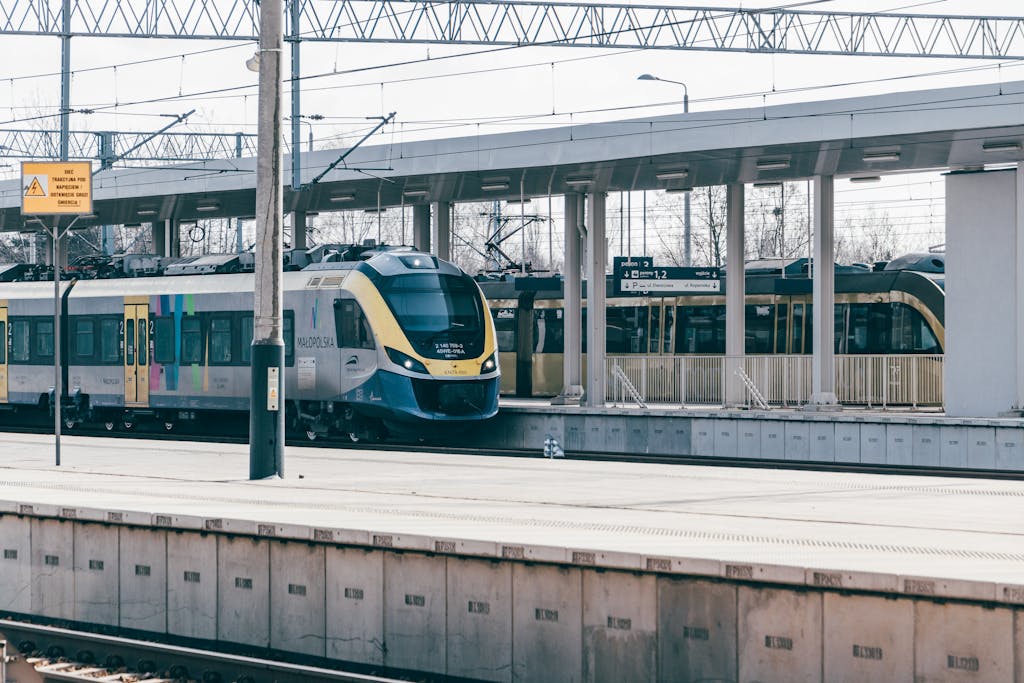
The BG Voz connects the city centre with outer suburbs and is free on all lines. Less relevant for most tourist itineraries, but useful for reaching areas beyond the tram and bus network, including some accommodation zones outside the centre.
Getting from Belgrade Airport by Free Transport
This is the question most travelers have, and the answer is yes — but with an important nuance.
Bus Line 72 runs from the airport area to Zeleni Venac in the city centre and is completely free. Journey time is 45 to 60 minutes depending on traffic. Luggage space is limited. The bus runs on a schedule rather than continuously, so check timing before you rely on it. For a solo traveler with a backpack arriving in daylight hours, it works well.
A1 Express Bus is faster (uses the motorway), covers the route to Slavija Square and the main railway station, but costs 400 RSD — paid to the driver. Not free.
For a full breakdown of every airport transfer option including taxis, private transfers, and journey time comparisons, see the Belgrade airport to city centre guide.
Night Transport in Belgrade
Trams do not run at night. After midnight, night bus services cover selected routes until around 4:00 AM when regular daytime service resumes. The night bus network is significantly less frequent than daytime service.
If you are out late — especially after a night in Savamala or the floating clubs on the Sava — a taxi or Yandex Go will be more practical than waiting for a night bus. For how taxis work in Belgrade and what apps to use, see the Belgrade taxi and Uber guide.
Belgrade Public Transport vs Taxis: When to Use Which
| Situation | Best option |
|---|---|
| Daytime sightseeing in the centre | Free tram or bus |
| Airport arrival with luggage | Official airport taxi or private transfer |
| Airport arrival, solo, small bag, daytime | Free Bus 72 |
| Late night return | Yandex Go or taxi |
| Day trip to Zemun or outer suburbs | Free bus or BG Voz |
| Transfer to bus/train station | Free tram or bus |
For most tourist activity during the day, free public transport covers everything. The main exceptions are the airport (Line 72 works but is slow) and late nights (trams stop, night buses are infrequent). Read the full Belgrade transport guide for tourists if you need taxi options for those gaps.
Planning Your Routes: Apps to Use
Moovit — the most widely used transit app in Belgrade. Live tracking, route planning, and real-time arrival times for all GSP Beograd lines. Available on iOS and Android. Free to use.
Google Maps — covers Belgrade transit routes well and is useful for combining walking directions with bus/tram connections.
GSP Beograd official site — official timetables and route maps. In Serbian, but the route maps are navigable with a translation tool.
Moovit offline Belgrade map — downloadable PDF of all daytime lines useful if you want an offline reference.
Download Moovit before you arrive. The live tracking feature is more reliable than printed schedules, particularly on tram lines where service frequency varies.
Is Belgrade the Only City in Europe With Free Public Transport?
At this scale, yes. The European Commission’s Urban Mobility Observatory confirmed on 7 January 2025 that Belgrade’s adoption of free transport makes it the largest European city to do so, with a population of 1.7 million. Smaller cities like Luxembourg (entire country), Montpellier, and Tallinn have done this previously, but none at this population size.
Mayor Šapić also announced plans to modernise the entire fleet by 2027 — replacing all buses, trams, and trolleybuses with new vehicles, and building a metro system scheduled for completion by 2030. The free transport policy and the fleet renewal are part of the same broader urban mobility strategy.
What This Means for Your Belgrade Budget
Free public transport changes the daily cost calculation in Belgrade significantly.
In most European cities, urban transport costs €2-4 per single journey or €7-15 for a daily pass. In Belgrade, that cost is zero across the full stay. For a 4-night trip with 4-6 transport journeys per day, this saves roughly €30-50 compared to what you would spend on transport in Prague, Budapest, or Krakow.
Combined with Belgrade’s already low hotel prices and cheap food scene, free transport is one of three factors that make Belgrade meaningfully cheaper for tourists than its regional peers. The Eastern Europe budget travel guide covers how the full daily cost compares across the region.
FAQ
Is Belgrade public transport really free for tourists?
Yes. Since January 1, 2025, regular buses, trams, trolleybuses, and BG Voz suburban trains in Belgrade have been free for everyone, including tourists. No ticket, card, or registration is required. The Tourist Organization of Belgrade confirms that city and suburban public transport is free.
What is not free on Belgrade public transport?
The main paid exceptions are airport and express services. The A1 airport minibus to Slavija Square charges a fare, while E Minibus Express lines may also charge separately. Regular city buses, trams, trolleybuses, and BG Voz services are free.
Do I need a card or app to use free Belgrade transport?
No. You do not need a BusPlus card, ticket, app, registration, or QR code to use regular free public transport in Belgrade. Just board any regular city bus, tram, trolleybus, or BG Voz suburban train and ride. Use apps only for route planning, not payment.
Can I get from Belgrade airport to the city for free?
Yes, using regular city Bus Line 72 from Belgrade Nikola Tesla Airport to Zeleni Venac. The journey usually takes around 45-60 minutes and is free under Belgrade’s regular city transport policy. The A1 Express Bus is faster but is a separate paid airport service.
Does the free transport include night buses?
Yes. Night buses on selected Belgrade routes are also free, but frequency is much lower than daytime service and trams do not normally operate through the night. Check routes before travelling late, especially if you are returning from nightlife areas or connecting to an early airport transfer.
What is the best tram line for sightseeing in Belgrade?
Tram Line 2, known as Krug Dvojke, is the best sightseeing tram route in Belgrade. It makes a circular loop around the city centre and passes close to key areas such as Slavija Square, Skadarlija, Kalemegdan Fortress, and the National Assembly. It is free, requires no booking, and works well as a low-effort first overview of the city.
Related Articles
Best Cheap Hostels in Eastern Europe 2026
Is There Uber in Belgrade in 2026? No — Use These Apps Instead
Belgrade Airport to City Centre: Every Option Compared
Where to Stay in Belgrade 2026: Best Areas, Budget Hotels & Honest Picks
Best Budget Hotels in Belgrade 2026
Day Trips from Belgrade 2026: Novi Sad, Niš, Tara and More
Is There a Bolt in Sarajevo in 2026?
Created by WanderGuide Travel Desk
Practical travel planning, built for independent travellers.
WanderGuide articles are created using official tourism and transport sources, route research, hotel-area checks, cost comparisons, local travel context and practical itinerary planning for first-time and budget-conscious travellers.
Read our editorial approach