
Belgrade is a better base for day trips than it is often given credit for. Serbia’s second city, Novi Sad, is 57 minutes away by train — the fastest city-to-city rail connection in the country. Niš, one of the oldest cities in the Balkans and the birthplace of Emperor Constantine, is under four hours by bus. Mokra Gora and the Šargan Eight railway are a half-day drive west into mountain scenery that has nothing in common with the flat Pannonian plain most visitors see arriving into Belgrade.
None of these require a rental car. All are doable independently using public transport or a guided tour. The list below covers the five strongest options for a single day out of Belgrade in 2026, with exact transport details and honest guidance on which suits which type of traveller.
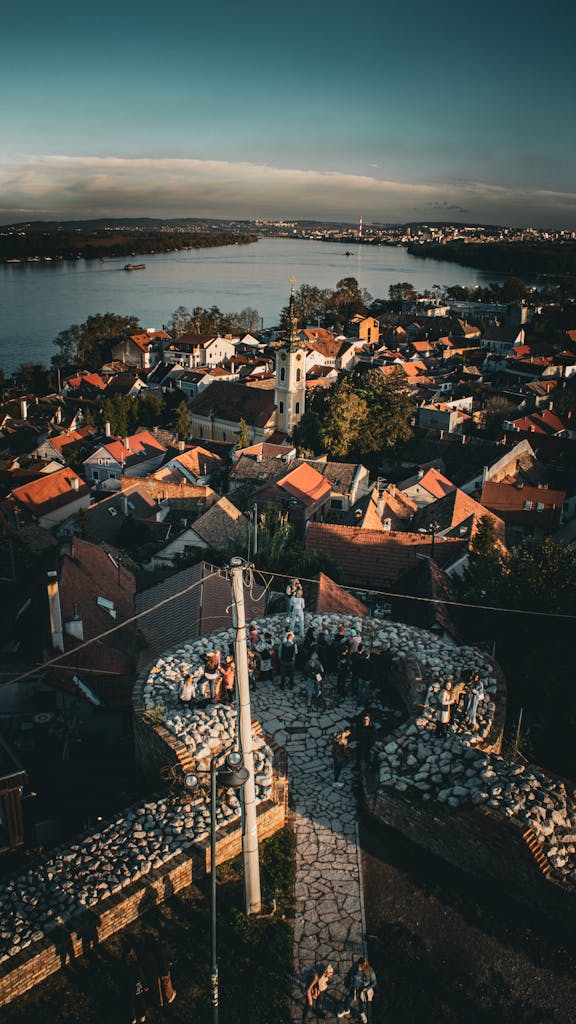
Best Day Trips from Belgrade : Quick Comparison
| Destination | Journey time | Best transport | Cost (one way) | Best for |
|---|---|---|---|---|
| Novi Sad | 57 min (train) | Train from Beograd Centar | RSD 410–950 | Architecture, history, first-timers |
| Sremski Karlovci | 1h 15 min (bus) | Bus or add-on to Novi Sad | ~RSD 400 | Wine, baroque town, couples |
| Niš | 3h–3h 30min (bus) | Bus from BAS | ~RSD 1,500 (€13) | Roman history, food, full-day |
| Mokra Gora + Šargan 8 | 3h 30min (car/tour) | Guided tour | From €130 pp | Scenic railway, mountain scenery |
| Golubac Fortress | 2h (car/tour) | Guided tour or car | From €118 pp | Danube gorge, Iron Gate canyon |
1. Novi Sad — The Easiest Day Trip
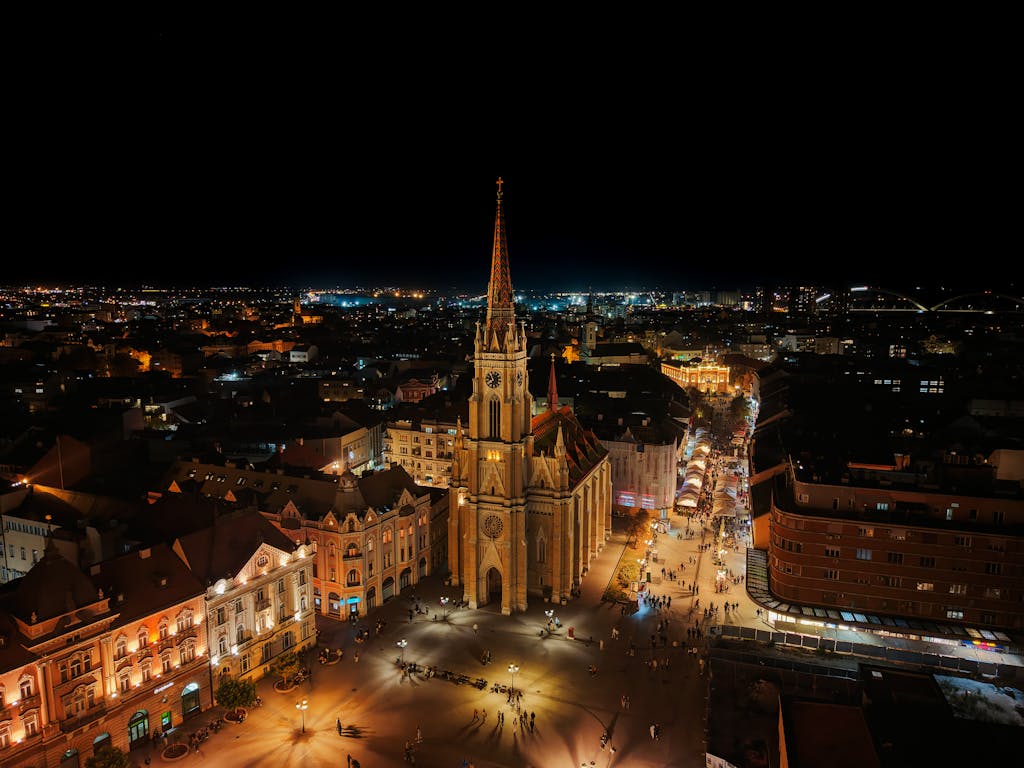
Journey: 57 minutes by train from Beograd Centar station. Trains run roughly hourly, operated by Srbija Voz. Tickets cost RSD 410–950 depending on the service. This is the fastest and most reliable transport option — the new high-speed rail line between Belgrade and Novi Sad has cut journey time from 90 minutes to under one hour, making it one of the best value rapid rail connections in the region.
What’s there: Serbia’s second city sits on the Danube in the Vojvodina plain and has a character noticeably different from Belgrade — more Central European, more baroque, with a pedestrian old town centred on Zmaj Jovina Street and Liberty Square. The dominant sight is Petrovaradin Fortress on the south bank of the Danube, a 17th-century Habsburg fortification built to defend against Ottoman expansion. Known as the “Gibraltar on the Danube,” it covers 100 hectares and includes 16 kilometres of underground tunnels, some open to the public. In summer it hosts EXIT Festival, one of Europe’s largest music events.
From the train station, the walk to the city centre takes 25–30 minutes or you can take a local bus. The fortress is across the Danube bridge from the city centre — a further 10-minute walk.
What to combine: Sremski Karlovci (see below) is 12km from Novi Sad by bus or taxi and is the natural add-on to a Novi Sad day.
Guided tour option: Full-day tours from Belgrade combining Novi Sad, Sremski Karlovci, and a Fruška Gora monastery are available from GetYourGuide from approximately €77 per person including transport, guide, and wine tasting.
Book train tickets: Srbija Voz official site or Polazak timetables for live schedules.
2. Sremski Karlovci — Wine, Baroque Architecture and No Crowds
Journey: approximately 1h 15 minutes by bus from Belgrade’s main bus station (BAS). Also reachable as a 15-minute bus or taxi ride from Novi Sad — most visitors combine the two in a single day.
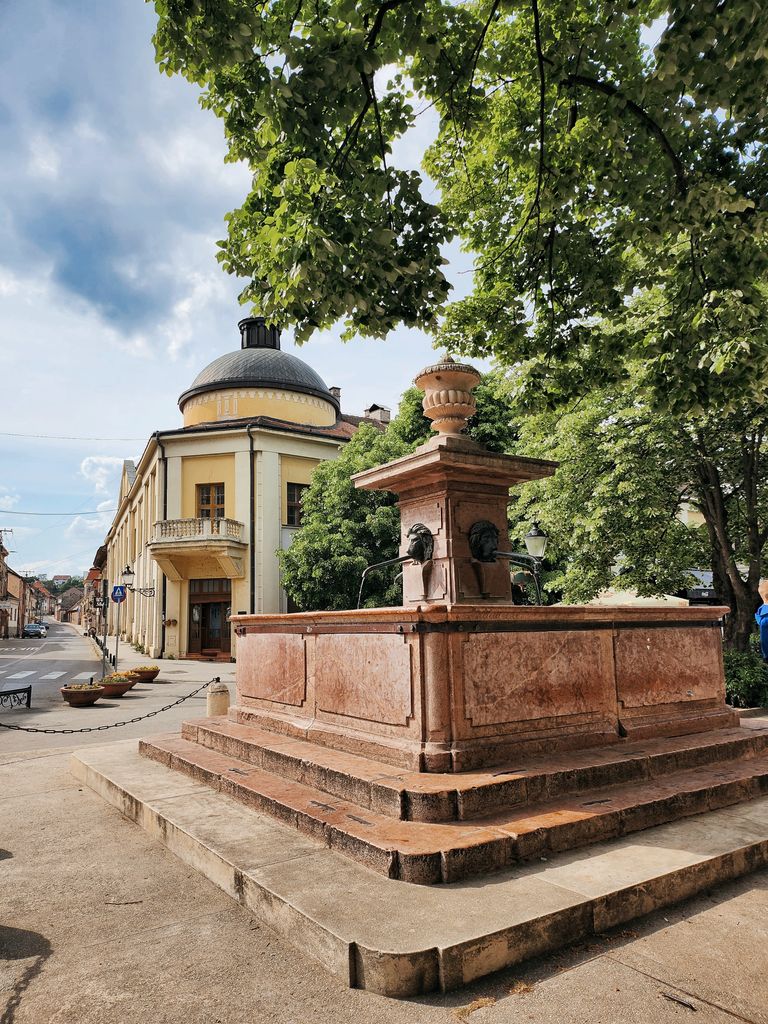
What’s there: Sremski Karlovci is a small baroque town at the foot of Fruška Gora mountain, famous across Serbia for two things: wine and architecture that looks like it belongs in Austria rather than the Balkans. The main square holds the Four Lion Fountain, the 1811 Serbian Orthodox Church of Saint Nicholas, the Catholic Church of the Holy Trinity, and the first Serbian high school (gymnasium), founded in 1791. The wine is Bermet — a local variety made to an 18th-century recipe that was reportedly served on the Titanic — and it can be tasted at several cellars in the old town.
Why go independently: Karlovci is genuinely worth a half-day on its own if you want to avoid the structure of a guided tour. It is compact enough to walk entirely on foot, the wine cellars are open for walk-in tastings, and it sees far fewer tourists than Novi Sad.
On a guided tour: most Belgrade day tours to Novi Sad include Sremski Karlovci and a monastery stop in Fruška Gora National Park. See GetYourGuide Novi Sad tours for available options.
3. Niš — Roman History and the Best Food Outside Belgrade
Journey: 3 hours to 3h 30min by bus from Belgrade’s main bus station. FlixBus runs 12 daily departures, first at 06:30, last at 23:15, from RSD ~1,500 (approximately €13). Niš Ekspres also operates the route hourly with tickets from approximately the same price. The bus is significantly faster than the train, which takes over six hours on the current infrastructure — take the bus.
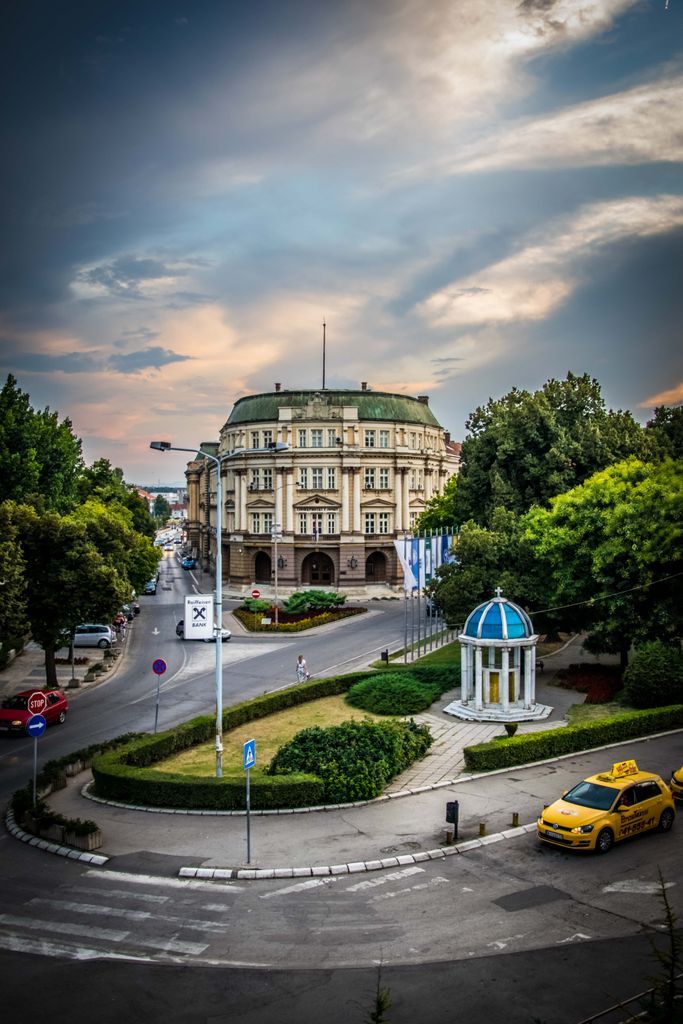
What’s there: Niš is Serbia’s third-largest city and one of the oldest continuously inhabited cities in the Balkans. Constantine the Great was born here in around 272 AD. The Niš Fortress on the Nišava River is the central landmark — a large 18th-century Ottoman fortress with walls and towers still standing, now used as a public park and open-air theatre space. A 20-minute walk from the fortress is Ćele Kula (Skull Tower), a structure built by Ottoman commanders from the skulls of Serbian rebels after the 1809 Battle of Čegar. It is a genuinely confronting historical site and unlike anything else in Serbia.
Niš also has the best ćevapi outside Belgrade — the local style is larger and served with a specific flatbread — and the covered market near the fortress is worth an hour in itself.
What Niš is not: a beautiful city in the way Novi Sad or Sremski Karlovci is. It is gritty, functional, and historically dense. The reward is substance rather than scenery.
Return: last bus back to Belgrade departs at approximately 23:15, giving a full day in the city with a comfortable return. Check live schedules on Omio before travelling as times vary by day of week.
Guided tour: GetYourGuide offers private day tours to Niš from Belgrade from approximately €255 per vehicle — worth it for a group of 3-4 sharing the cost.
4. Mokra Gora and the Šargan Eight Railway
Journey: approximately 3h 30 minutes by car or organised tour. There is no direct public transport from Belgrade to Mokra Gora — this trip requires either a rental car or a guided tour.
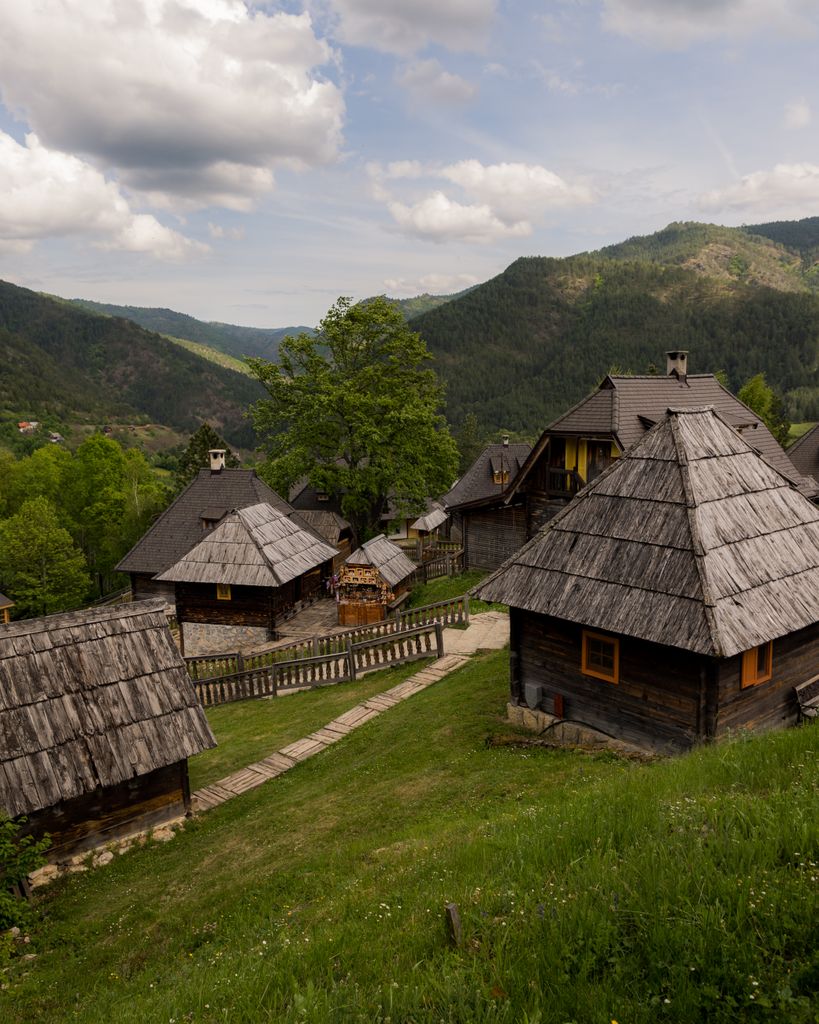
What’s there: Mokra Gora is a village in western Serbia near the Tara National Park, most famous for the Šargan Eight (Šarganska Osmica) — a narrow-gauge heritage railway that makes a figure-eight loop through 22 tunnels and across five bridges as it climbs the steep mountain gradient. The railway was originally built in 1925 to connect Belgrade with the Adriatic coast; it was decommissioned in 1974 and reopened as a tourist railway in 2001. The ride takes approximately 2 hours and includes stops at viewpoints over Mokra Gora canyon.
Three departures daily: 10:30, 13:30, and 16:00 from Mokra Gora station. The railway is not open year-round — confirm operating dates before booking. Train ticket: approximately 900 RSD per person.
Adjacent to the railway station is Drvengrad (Wooden Town), a traditional village built by Serbian film director Emir Kusturica for his 2004 film Life Is a Miracle and left standing afterward as a functioning cultural complex with a restaurant, library, cinema, and gallery.
Honest caveat: this is a long day from Belgrade. The drive is 3.5–4 hours each way through variable road conditions. Most visitors who want the full Šargan Eight experience go on an organised tour rather than driving themselves — the logistics of arrival time relative to train departures make timing difficult independently. The road to Tara National Park itself (rather than Mokra Gora) has poor sections and is not recommended for the faint-hearted.
Guided tours from Belgrade: GetYourGuide lists multiple options combining Mokra Gora, Šargan Eight, and the Drina River House from approximately €130 per person, departing Belgrade early morning and returning in the evening. These typically run 10–12 hours.
5. Golubac Fortress and the Iron Gate
Journey: approximately 2 hours by car or guided tour, 110km east of Belgrade along the Danube.
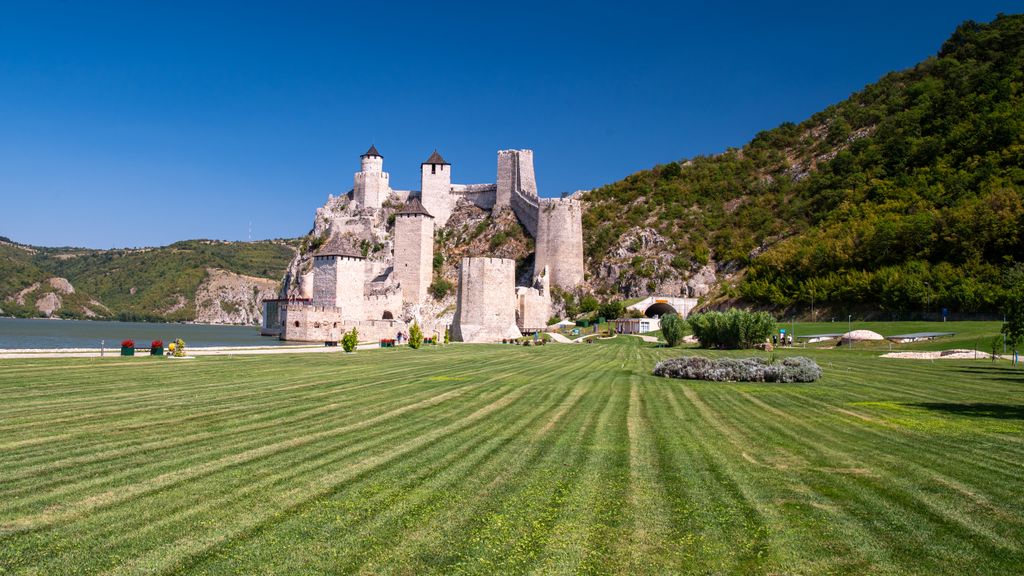
What’s there: Golubac Fortress sits directly on the Danube where the river narrows into the Iron Gate gorge — the dramatic canyon where the Danube carves through the Carpathian mountains on the border with Romania. The fortress itself is a 14th-century medieval castle with nine towers, extensively restored between 2013 and 2018. The restoration is controversial among historians — it is now pristine and photogenic rather than authentically ruined — but the setting on the gorge is genuinely spectacular regardless.
The Iron Gate canyon continues east for approximately 100km to form one of the most dramatic river landscapes in Europe. The main viewpoint accessible by car is near the town of Donji Milanovac.
No public transport: there is no direct bus from Belgrade to Golubac suitable for a day trip. This destination is car or tour only.
Guided tours from Belgrade: GetYourGuide lists the Golubac and Iron Gate day tour from Belgrade from approximately €118 per person, with 4.9-star rating from 24 reviews — one of the highest-rated Belgrade day tours available.
Practical Notes for All Day Trips
Where to buy bus tickets: Belgrade’s main bus station (BAS) is at Železnička bb, adjacent to the main railway station in Savamala. Bus tickets for Niš and other Serbian cities can be bought at the station counter on the day, or in advance through FlixBus for FlixBus services or Omio for route comparison.
Where to buy train tickets: Srbija Voz is the national rail operator. Tickets for Novi Sad can be bought at Beograd Centar station (note: not Beograd Glavna, the old central station, which is no longer in regular use — the correct departure station for Novi Sad is Beograd Centar or Beograd BG Voz). Tickets are also available at the station on the day, usually with availability.
Getting to Belgrade’s bus station: the BAS is a 20-minute walk from the old city centre, or take the free tram (Line 2 stops nearby). Belgrade public transport is free — no ticket required. See the Belgrade public transport guide for routes and practical details.
Guided vs independent: Novi Sad and Niš are both very doable independently with public transport. Mokra Gora and Golubac are tour-only unless you have a rental car. Sremski Karlovci works well either independently or as part of a guided Novi Sad day.
FAQ
What is the best day trip from Belgrade for first-time visitors?
Novi Sad is the best day trip from Belgrade for first-time visitors. The train journey from Beograd Centar is direct, frequent, and easy to book through Srbija Voz. Novi Sad is walkable, Petrovaradin Fortress is one of Serbia’s most impressive landmarks, and adding Sremski Karlovci for wine and baroque architecture makes a complete day with minimal logistics.
Can I visit Novi Sad from Belgrade by train in one day?
Yes, easily. Morning and evening trains make Novi Sad one of the simplest day trips from Belgrade. Tickets usually cost around RSD 410-950 depending on service type, and the fastest trains take under an hour. Check current times and prices on the official Serbian Railways timetable before travel.
How long does the bus from Belgrade to Niš take?
The bus from Belgrade to Niš takes around 3 hours on the fastest services and about 3 hours 30 minutes on average. FlixBus runs regular Belgrade to Niš services, and buses are much better than trains for a day trip because the train journey is too slow in each direction.
Is the Šargan Eight railway worth visiting from Belgrade in one day?
Yes, but it requires an early start and either a rental car or an organised tour. The journey from Belgrade to Mokra Gora takes around 3.5-4 hours each way. The Šargan Eight railway usually has several daily tourist-train departures in season, but day-trippers from Belgrade need to arrive early. Guided tours are the most practical option because they handle the timing.
Is Belgrade public transport free for tourists?
Yes. Buses, trams, trolleybuses, and BG Voz suburban trains in Belgrade have been free for all passengers, including tourists, since January 2025. No ticket, card, or registration is required for standard city and suburban transport. The Tourist Organization of Belgrade confirms the free public transport policy.
Related articles:
- 3 Days in Belgrade 2026
- Where to Stay in Belgrade 2026
- How to Travel Eastern Europe by Train in 2026
- Eastern Europe Travel Guide 2026
- Eastern Europe Summer Travel Deals 2026
Created by WanderGuide Travel Desk
Practical travel planning, built for independent travellers.
WanderGuide articles are created using official tourism and transport sources, route research, hotel-area checks, cost comparisons, local travel context and practical itinerary planning for first-time and budget-conscious travellers.
Read our editorial approach