
Any North Macedonia Travel Guide needs to start with the cost and currency reality: this is one of the cheapest countries in Europe to travel through, but it does not use euros.
An espresso costs 50 MKD (~€0.85). A full plate of tavče gravče, the national bean stew, runs 180 MKD (~€3). The bus from Skopje to Ohrid is 320 MKD (~€5.50). Budget travelers can manage €30–50/day without effort.
The currency is the Macedonian Denar (MKD). This catches travelers coming off a Balkans circuit – Bulgaria uses euros now, Serbia uses dinars, Bosnia uses convertible marks, and North Macedonia has its own currency. Cards are unreliable outside Skopje’s main streets, so come with cash or plan to withdraw on arrival.
Currency: Macedonian Denar (MKD). Exchange rate: ~60 MKD = €1 (~57 MKD = $1). Prices confirmed from multiple sources, May 2026.
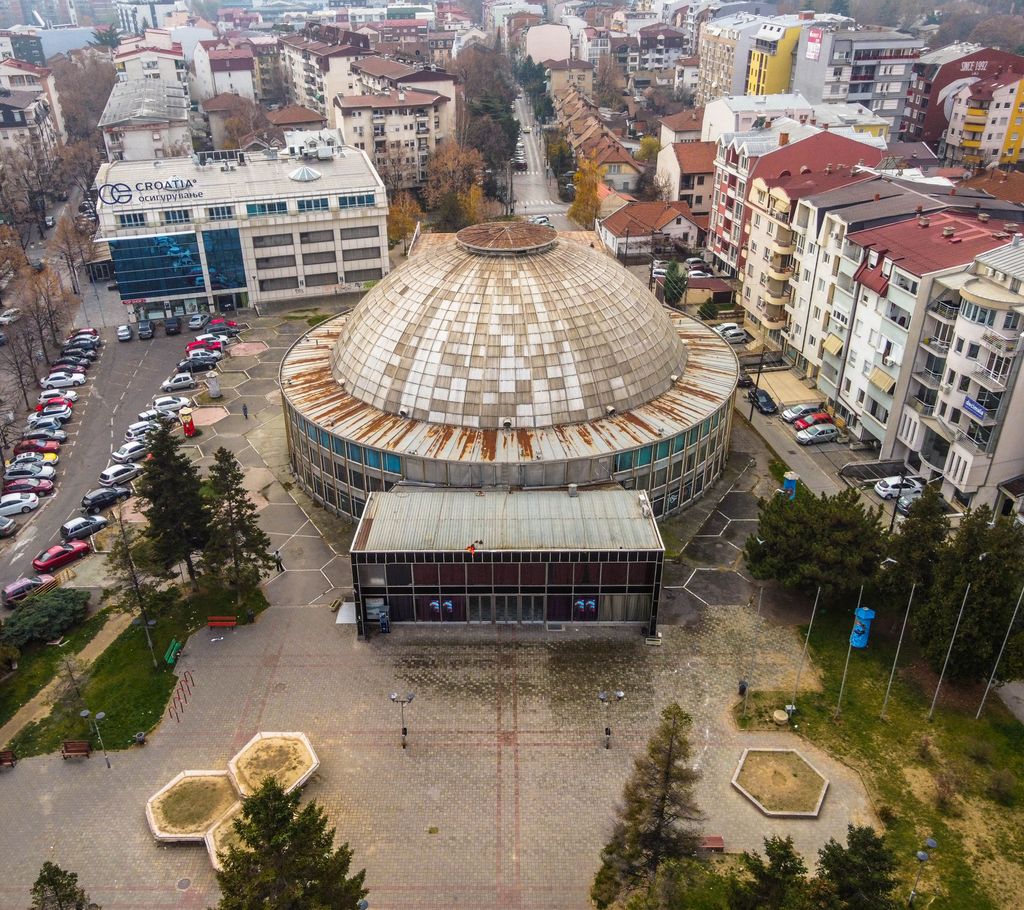
North Macedonia Travel Guide – Is it worth visiting?
Yes — particularly as part of a Balkans circuit.
As a standalone destination, North Macedonia rewards travelers who go slowly: Skopje for 2-3 days, Ohrid for 2-3 days, a national park for 1-2 days. The country is small (roughly the size of Vermont), cheap, safe, and genuinely welcoming in a way that feels less performative than more tourist-developed Balkans destinations.
As a circuit stop between Serbia, Kosovo, or Albania, it adds minimal cost and maximum diversity. Lake Ohrid is one of the genuinely extraordinary natural sites in Europe. Skopje’s Old Bazaar is among the best-preserved Ottoman bazaars on the continent. The national dishes — tavče gravče, ajvar, kebapče — are their own argument for staying longer than planned.
Skopje: What It Is and What It Isn’t
Skopje is the capital and the first stop for most visitors. It’s a city that requires orientation before it makes sense.
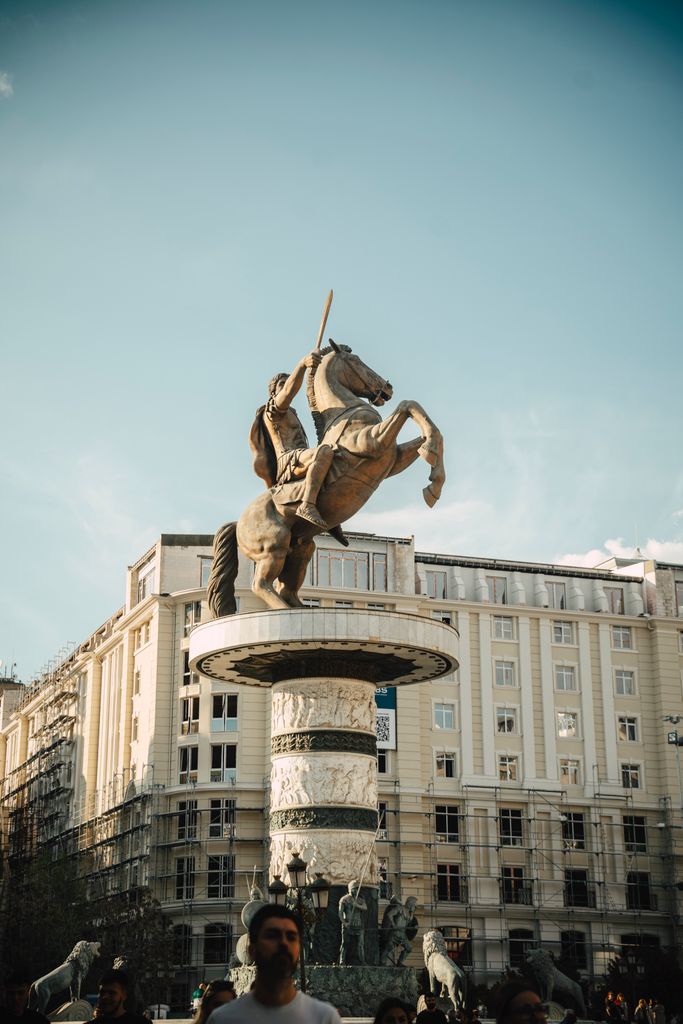
Macedonia Square and the statues:
The neoclassical facades, the giant equestrian statue (officially “Warrior on a Horse,” commonly understood to represent Alexander the Great), the baroque fountains, the triumphal arches — this is the “Skopje 2014” project, a government aesthetic overhaul completed during the Gruevski administration between 2010 and 2014. The estimated cost: €500-600 million. In a country where roughly a third of the population lives in poverty, the project was deeply controversial domestically and widely ridiculed internationally.
Walking through Macedonia Square now, the effect is genuinely surreal — neoclassical additions bolted onto existing modernist and brutalist structures, the two architectural vocabularies fighting for dominance on the same building. Whether it’s fascinating or ugly is a legitimate debate. It’s certainly unlike anywhere else.
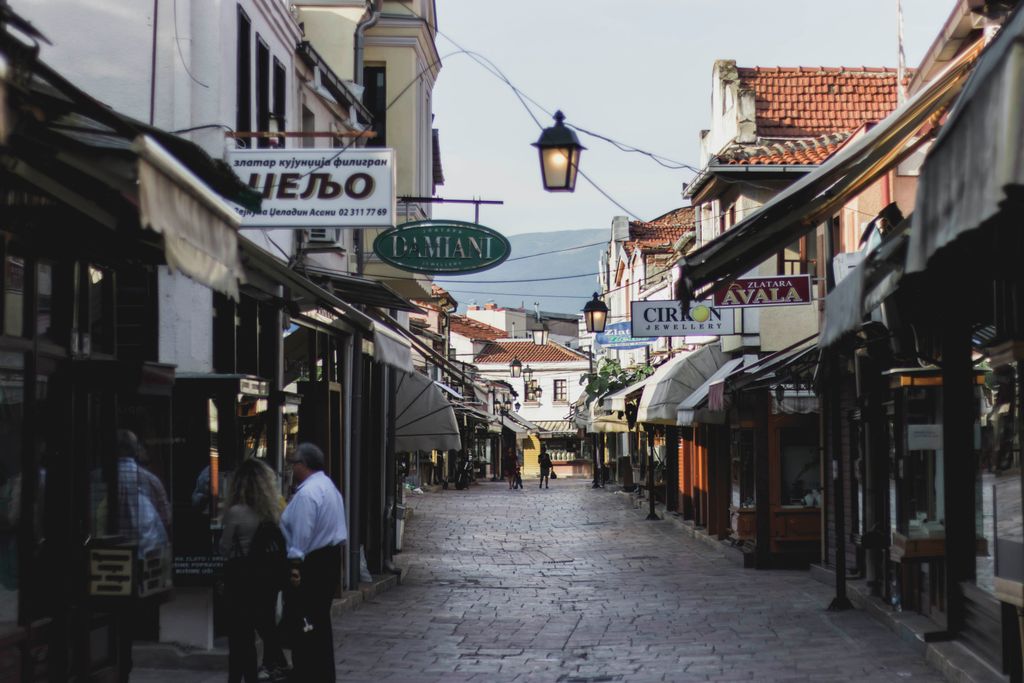
The Old Bazaar (Čaršija):
Two minutes’ walk across Stone Bridge from Macedonia Square, the Old Bazaar is the real Skopje. Trading continuously since the 12th century, it’s one of the largest preserved Ottoman bazaars in the Balkans — functioning copper workshops, mosques, hans (caravanserais), tailors, and tea houses. The contrast with the neoclassical show of the square is the most Skopje thing about Skopje.
Spend a morning here. Buy copper work or hand-embroidered textiles. Have coffee in a han courtyard. Walk all the way to Kale Fortress above the bazaar for views over the city and the Vardar River.
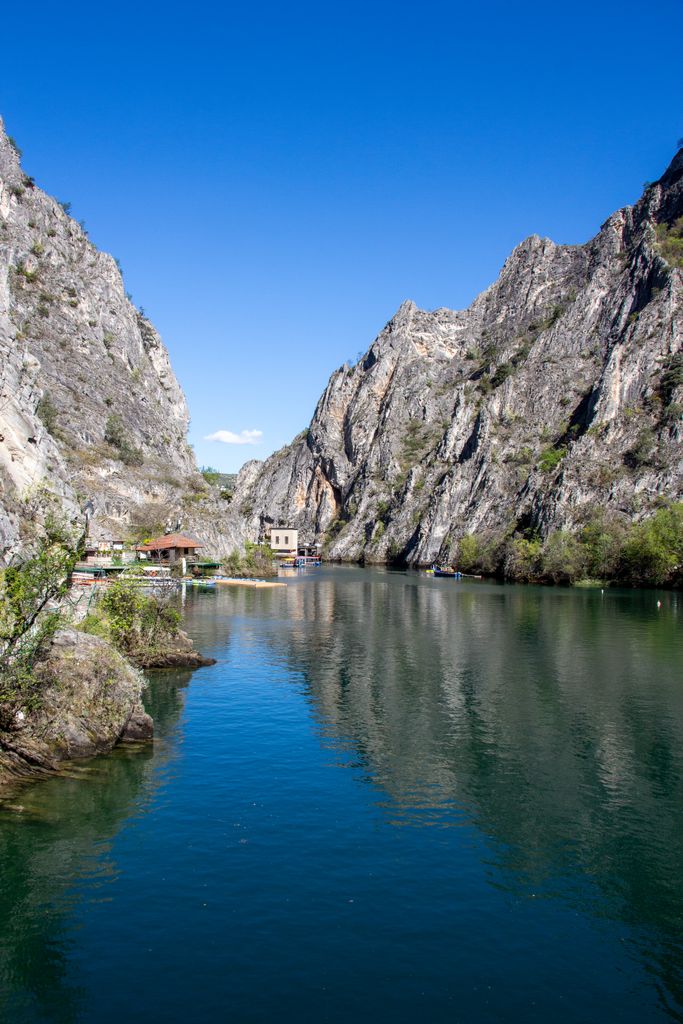
Matka Canyon:
30 minutes from the city centre by bus or taxi, Matka Canyon is a gorge with a reservoir, hiking trails, swimming, and boat tours to Vrelo Cave (stalactites, possibly Europe’s deepest underwater cave — surveys ongoing).
Boat to Vrelo Cave: 500-600 MKD (~€8-10), departs from the canyon dock.
A full day covering Matka Canyon and Vodno Mountain by taxi costs 800-1,000 MKD (~€14-17) including waiting time. Negotiate this with any taxi driver at the start of the day — it’s one of the better-value single-day transport deals in Europe.
Free walking tour:
Departs daily from Macedonia Square, tip-based. Multiple operators compete for the same route (Stone Bridge, Old Bazaar, Kale Fortress). 2.5-4 hours. English-speaking guides are well-reviewed across comparison sites. Go on your first morning to orient yourself before exploring independently.
Lake Ohrid: What Makes It Different
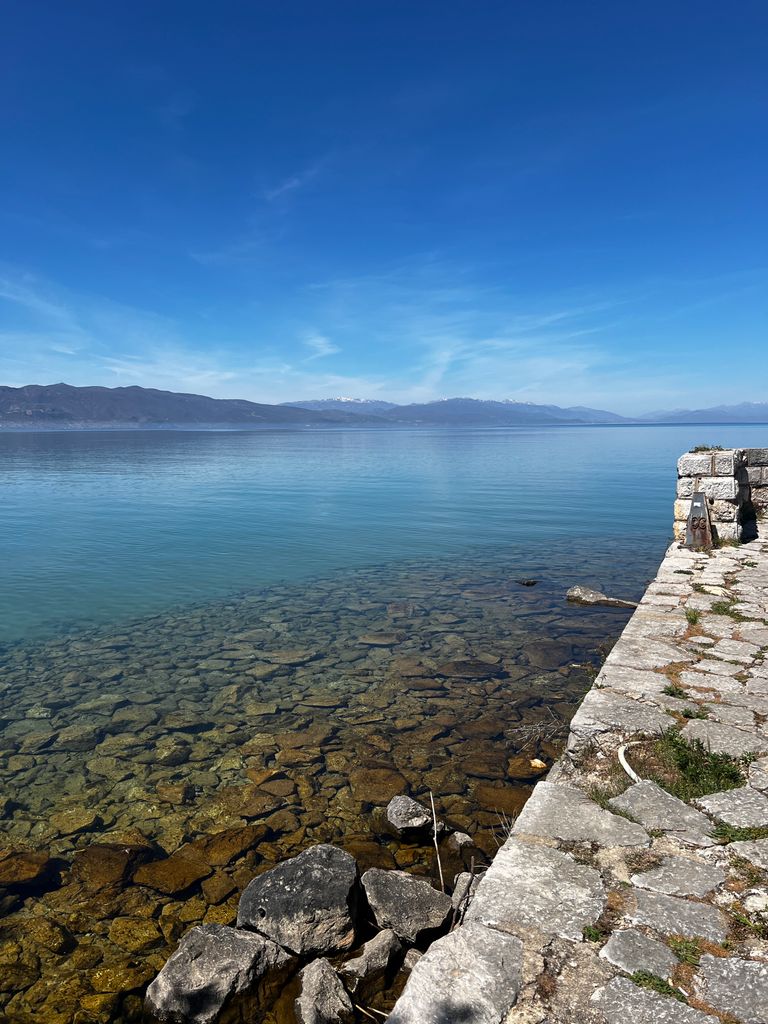
Lake Ohrid is the reason most travelers add North Macedonia to a Balkans itinerary. It holds two things that are genuinely rare together:
An ancient lake. Ohrid is estimated to be 4-6 million years old — one of the most ancient lakes in Europe, and one of only a handful of ancient lakes in the world. The geological age has allowed 200+ endemic species to evolve here that exist nowhere else on Earth. The lake has a dual UNESCO designation: Cultural (for Ohrid old town’s Byzantine-era churches and monasteries) AND Natural (for the lake ecosystem). Dual UNESCO designations are uncommon; they reflect genuine significance on both dimensions.
The town: The Ohrid old town sits on a hill above the lake with Byzantine- era churches at every turn. The Church of St. John at Kaneo sits on a cliff above the water — the photograph that puts Ohrid on Instagram. Free to see from outside; small entry fee inside.
Sveti Naum: 30km south of Ohrid by road or boat, the Sveti Naum monastery sits above a spring where the lake’s water emerges from underground. Peacocks roam the grounds. Worth a half-day.
Ohrid Summer Festival: July and August bring significant crowds and accommodation pressure. Prices spike; book weeks ahead. Shoulder season (May-June, September) gives you the lake and the town without the summer rush and at 20-30% lower accommodation prices.
Getting from Skopje to Ohrid
Shared taxi (kombi) — recommended: Departs from the main Skopje bus station area. Price: 500 MKD (~€8.50) per person. Journey time: ~2 hours. Significantly faster than the bus for nearly the same price.
Ask for the kombi to Ohrid at the bus station. Shared taxis fill up and depart when full — no fixed schedule. In summer, morning departures fill quickly.
Bus: Also departs from the main bus station. Price: 320 MKD (~€5.50). Journey time: 3.5-4 hours. Cheaper but takes twice as long as the kombi. Fine for travelers with time; the kombi is better value for the time-cost.
The National Parks
All three major national parks charge no entry fee.
Mavrovo National Park: The most developed for visitors. Bigorski Monastery (17th-century, notable wood-carved iconostasis) is inside the park. In winter: skiing at Popova Šapka (cheap by European standards). In summer: hiking, wildlife (bears, deer).
Galičica National Park: Sits between Lake Ohrid and Lake Prespa. Views over both lakes from the ridge above 2,000m. Less visited than Mavrovo.
Pelister National Park: Near Bitola (second city, 2 hours from Skopje). Glacial “mountain eyes” lakes, similar to the Albanian Alps landscape.
Bitola itself is worth a stop: the Širok Sokak pedestrian street, neo-classical cafés, old men in fedoras nursing macchiatos — the most relaxed city pace in North Macedonia.
Practical Information
Currency: Macedonian Denar (MKD). ~60 MKD = €1. Bring cash for anything outside central Skopje. ATMs available in cities. Cards unreliable in villages, markets, guesthouses.
City navigation: Skopje city buses cost 35 MKD (~€0.60). Download the Moovit app — English signage on buses is inconsistent.
Name: “North Macedonia” since 2019, following the Prespa Agreement with Greece. The name change was the condition for NATO accession (achieved 2020) and continued EU accession talks.
EU/Schengen: North Macedonia is neither EU nor Schengen. Days here do not count toward your Schengen 90-day limit. Most Western passport holders (EU, US, UK, AU) can enter visa-free for up to 90 days.
Safety: US State Department Level 1 (normal precautions). Low crime, welcoming to tourists.
Connectivity: Local SIM cards available at Skopje airport (Telekom Macedonia, A1). EU roaming does not apply. A local SIM is strongly recommended.
North Macedonia Costs at a Glance (2026)
| Item | MKD | EUR approx |
|---|---|---|
| Espresso | 50 MKD | ~€0.85 |
| Tavče gravče (full lunch) | 180 MKD | ~€3 |
| City bus | 35 MKD | ~€0.60 |
| Bus Skopje-Ohrid | 320 MKD | ~€5.50 |
| Shared taxi Skopje-Ohrid | 500 MKD | ~€8.50 |
| Matka Canyon boat | 500-600 MKD | ~€8-10 |
| Full-day Skopje taxi | 800-1,000 MKD | €14-17 |
| Skopje hostel | ~900 MKD | ~€15 |
| Ohrid guesthouse (shoulder) | ~2,800 MKD | ~€47 |
| Budget daily total | ~1,800-3,000 MKD | €30-50 |
| Mid-range daily total | ~3,600-6,000 MKD | €60-100 |
FAQ
Is North Macedonia worth visiting?
Yes. North Macedonia is especially worth visiting as a Balkans circuit stop between Serbia, Kosovo, or Albania. Lake Ohrid is genuinely extraordinary, with UNESCO-listed natural and cultural heritage, while Skopje’s Old Bazaar is one of the best-preserved Ottoman-era market districts in the Balkans. Budget travellers can usually plan around €30-50 per day, making North Macedonia one of the best-value additions to an Eastern Europe itinerary.
What currency does North Macedonia use?
North Macedonia uses the Macedonian denar, or MKD, not the euro. A rough working rate is about 60 MKD to €1, but check the official National Bank of the Republic of North Macedonia exchange-rate list before travel. Cards work in central Skopje, larger hotels, and many restaurants, but cash is essential for local markets, village guesthouses, rural areas, taxis, and traditional restaurants.
How do I get from Skopje to Ohrid?
The regular bus from Skopje to Ohrid takes around 3-3.5 hours, with tickets available through operators and platforms such as FlixBus and Gjirafa Travel. Shared taxis or kombis from the main bus station can be faster if available, usually departing when full. Ask at Skopje bus station for current shared taxi options to Ohrid, because schedules and informal departures can change.
How much does North Macedonia cost per day?
Budget travellers can usually manage North Macedonia on €30-50 per day, with hostel beds, local meals, and low-cost public transport. Mid-range travellers should budget closer to €60-100 per day. A local meal, espresso, and intercity bus ticket are still cheap by European standards, especially compared with Croatia, Greece, or Central Europe. For official planning ideas, start with the North Macedonia tourism website.
What is Skopje 2014?
Skopje 2014 was a major government-led redevelopment project that added neoclassical facades, monumental statues, fountains, and symbolic architecture to the centre of Skopje. The result is visually striking and politically divisive: neoclassical additions sit beside modernist buildings, Ottoman-era streets, and earthquake-era reconstruction. The large equestrian statue in Macedonia Square is officially called “Warrior on a Horse” but is widely understood to represent Alexander the Great, reflecting the identity politics that shaped North Macedonia’s name dispute with Greece before the 2019 name change.
Related articles:
- Eastern Europe Budget Backpacker Guide 2026
- Albania Travel Guide 2026
- Eastern Europe Travel Guide 2026
- Schengen vs Non-Schengen Eastern Europe 2026
Created by WanderGuide Travel Desk
Practical travel planning, built for independent travellers.
WanderGuide articles are created using official tourism and transport sources, route research, hotel-area checks, cost comparisons, local travel context and practical itinerary planning for first-time and budget-conscious travellers.
Read our editorial approach