
The standard Montenegro trip: Kotor for 2–3 nights, Budva for 1–2 nights, and a boat to Our Lady of the Rocks. That’s a good trip. The Bay of Kotor is genuinely one of Europe’s most dramatic coastal settings. Budva has beaches and nightlife.
But Montenegro beyond Kotor is where the country becomes much more than a short coastal break.
The other half of Montenegro — one to three hours inland — has the deepest canyon in Europe, one of only three remaining primeval forests on the continent, the largest lake in the Balkans, a monastery that appears to float against a vertical cliff face, and white-water rafting through a 1,300-metre gorge for €50.
Most visitors never see any of it. A 5-night itinerary sees both.
Prices confirmed from multiple sources, May 2026. Montenegro uses euros.
The Coast: What’s Worth Your Time and What Isn’t
Kotor is worth it. The fortress walls are genuine Venetian military architecture (entry €15, free before 8AM). The old town is one of the most intact medieval ensembles on the Adriatic. The Bay of Kotor’s scale and drama are not exaggerated. Two nights minimum, three if you add Perast and the Our Lady of the Rocks boat trip.
Full Kotor guide: Kotor Montenegro Guide 2026
Budva divides opinions. The old town is charming and small — 30 minutes to walk thoroughly. The Budva Riviera beaches are good. The nightlife is genuine in peak season. But Budva is also Montenegro’s most packaged tourist destination, and it shows. Worth a night, not three.
Sveti Stefan — the famous island hotel visible from the road south of Budva — is no longer accessible to non-guests (now the Aman Sveti Stefan from €800/night). The view of the island from the headland is free and good for a photograph. Don’t go expecting to walk on it.
Herceg Novi at the bay’s entrance and Perast in the bay interior are both worth half-days. Perast in particular — 17 Venetian palaces, population 350 — is one of the finest preserved small baroque towns on the Adriatic.
Durmitor National Park and the Tara Canyon
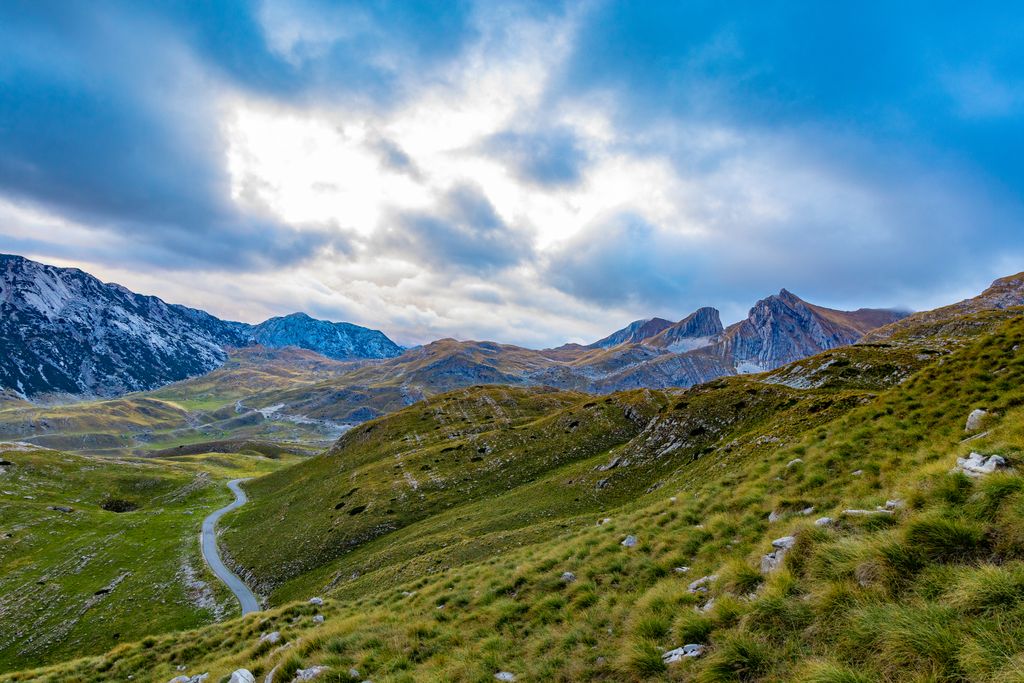
Durmitor is 3 hours from Kotor and 2 hours from Podgorica. Most visitors don’t go. That’s the gap.
The Tara River Canyon is 1,300 metres deep — the deepest gorge in Europe and second only to the Grand Canyon (1,857m) in the world. UNESCO confirmed this when it added Durmitor to the World Heritage list. The canyon walls are forested. The river at the bottom is turquoise. The Đurđevića Tara Bridge, built in 1940, spans 365 metres across the canyon at 150 metres above the water. You can zipline from the bridge.
White-water rafting the Tara: half-day, €50-65 per person. Season: April-October. Best conditions are May and June when snowmelt makes the river fastest. July-August is calmer and suitable for beginners and families. Book through local operators in Žabljak or GetYourGuide — most include transport from the starting point.
The park itself has 18 glacial lakes — called “mountain eyes” — and more than 50 peaks over 2,000 metres. The highest is Bobotov Kuk at 2,523m. Black Lake (Crno Jezero) is the most accessible: a 3.5km walk around the perimeter, 49 metres deep despite its shallow-looking surface, framed by dense conifer forest and limestone peaks.
Entry: €5 per person per day, or €13.50 for an annual pass covering all Montenegro national parks. If you visit two or more parks (Durmitor + Biogradska Gora, or Durmitor + Lake Skadar), the annual pass pays for itself.
Base: Žabljak, the highest inhabited town in the Balkans at approximately 1,456 metres elevation. Small, practical, cold in winter, busy in summer. Guesthouses and small hotels available from €30-60/night.
Biogradska Gora: One of Three Primeval Forests Left in Europe
Biogradska Gora is not the most dramatic or the most visited national park in Montenegro. It is one of only three remaining primeval forests in Europe — old-growth forest that has never been felled, never been managed, never been replanted. The other two are Białowieża on the Poland-Belarus border and Perućica in Bosnia’s Sutjeska National Park.
“Primeval” means what it says: these trees grew from seeds, fell, rotted, and were replaced without human intervention for thousands of years. The understory, the deadwood, the light through the canopy — all of it is what European forest looked like before humans began clearing and managing it. Walking through it is a different experience from walking through managed forest.
The centrepiece is Biograd Lake — a glacial lake in the heart of the forest, clear, cold, with walking paths around the perimeter and rowboat rental in summer. The whole visit takes 2-4 hours.
Entry: included in the Montenegro national park day ticket (€5) or annual pass.
Ostrog Monastery
Most visitors who make it to Montenegro’s interior do so for Durmitor. Many fewer visit Ostrog, despite it being the most-visited single site in Montenegro — over 400,000 visitors annually, which for a country of 620,000 residents is extraordinary.
Ostrog is a 17th-century Orthodox monastery built directly into a vertical white dolomite cliff face at approximately 900 metres elevation. From the road below, the Upper Monastery appears to float against the cliff, the white buildings indistinguishable from the rock face they’re embedded in. The architecture is technically impossible-looking: two churches pressed into natural cave openings in the vertical cliff, the access paths carved into the stone.
The monastery contains the relics of Saint Basil of Ostrog. It is a pilgrimage destination for Orthodox Christians and — unusually — for Muslims as well. The cross-religious significance is genuine and documented.
Entry: Free. 1.5 hours from Kotor, easily combined with a coastal-to-inland day.
Lake Skadar
Lake Skadar is the largest lake in the Balkans (shared between Montenegro and Albania). It’s 44km long, surrounded by limestone karst mountains, and home to 270+ bird species including the globally endangered Dalmatian pelican — one of the largest pelican species and one of the rarest.
The Crmnica region on the Montenegrin shore is the country’s only wine-producing area. The grapes here — Vranac (red) and Krstač (white) — are grown on hillside terraces above the water and aren’t widely exported. Trying Montenegrin wine at the lake is one of the more specific regional food experiences available in the Balkans.
Murici beach on the lake shore is consistently cited as one of the best freshwater swimming spots in the Balkans — remote, clean, surrounded by mountains. The lake is 2 hours from Kotor.
Boat tours from Virpazar cover the birdwatching areas and wine villages: approximately €20-40/person through local operators or GetYourGuide.
Montenegro beyond Kotor? How Many Days Do You Need
3 nights: Kotor + Perast day trip + possibly Budva. Coastal only.
5 nights: Kotor (2 nights) + Budva or Perast (1 night) + Durmitor or Biogradska Gora (2 nights including travel). This is the minimum for seeing both halves of the country.
7 nights: Adds Ostrog Monastery, Lake Skadar, and a second national park. The complete Montenegro circuit.
The 3-night recommendation that most guides give produces the experience the Pinterest brief describes — you see the coast, miss the interior, and come home with photographs of Kotor Bay without knowing what was three hours north.
Montenegro vs Croatia: Specific Differences
Montenegro and Croatia share the Adriatic, the Venetian architectural heritage, and a summer tourist season. The differences:
Montenegro is cheaper. Budget daily in Montenegro (€50-80) is lower than comparable Dubrovnik (€70-110). Kotor fortress entry (€15) is less than Dubrovnik’s city walls (€35).
Croatia has islands. Hvar, Brač, Korčula, Vis — no Montenegrin equivalent. If island-hopping is the plan, Croatia wins clearly.
Montenegro has interior wilderness Croatia can’t match. The Tara Canyon, Durmitor, Biogradska Gora, and the dramatic Black Mountains are without a coastal Croatian equivalent. If the combination of Adriatic coast and wild mountain interior is the goal, Montenegro is the only destination.
Practical Information
Getting around: A rental car is the only practical option for the interior. Durmitor and Biogradska Gora are not accessible on public transport within a day’s visit timeframe from the coast. Car rental: €25-40/day. Roads in the north are mountain-grade in places — drive carefully.
Safety: Montenegro is safe. No visa needed for EU, US, UK, Australian citizens (90 days). The currency is the euro.
Best time: May-June for rafting (best water conditions), wildflowers, and fewer crowds. July-August for beach season and maximum Tara Canyon tour frequency. September for warm sea, quieter coast, and good inland weather. Winter for skiing at Žabljak (affordable by European standards) and Kotor’s quiet season.
FAQ
How much does backpacking Eastern Europe cost per day in 2026?
Albania, Bosnia, Bulgaria, and Serbia cost around €25-45 per day on a backpacker budget, assuming hostel dorms, local restaurants, and public transport. Budapest is closer to €55-70 per day, while Prague is usually around €60-85 per day. The Balkans are still the cheap part of Eastern Europe; Central Eastern Europe is less so. Belgrade is the specific outlier because public transport has been free since January 1, 2025.
What is the cheapest Eastern European country to backpack?
Albania and Bosnia are the strongest cheap backpacking picks, with around €30-40 per day achievable outside peak coastal season. Serbia follows closely, and Belgrade’s free public transport makes it effectively cheaper than the daily rate suggests. Bulgaria is comparable for city travel, especially Sofia and Plovdiv, though prices vary by season and route.
Is Eastern Europe still cheap in 2026?
The Balkans are still genuinely cheap in 2026, especially Albania, Bosnia, Serbia, and Bulgaria. Budapest and Prague have risen steadily and are no longer cheap by Eastern European standards, though they remain below many Western European capitals. The Post Office City Costs Barometer 2026 ranked Sarajevo as Europe’s best-value city break, with Belgrade also in the top-value group.
How long does it take to backpack Eastern Europe?
Two weeks is the minimum for a meaningful Balkans or Eastern Europe backpacking circuit. A 14-night route such as Budapest, Belgrade, Sarajevo, Plovdiv, Sofia, and Brașov covers six cities without becoming too rushed. Three weeks is better if you want to add Albania, slower travel days, or extra stops like Novi Sad, Mostar, Ohrid, or the Albanian coast.
What is the best Eastern Europe backpacker route in 2026?
The classic Balkans route is Budapest to Belgrade, then Sarajevo, Sofia, and Plovdiv, using trains and buses where practical. For current long-distance buses, check FlixBus, and for Serbian trains use Srbija Voz. The newer 2026 budget route starts in Tirana, helped by Ryanair’s expanded Tirana base: Tirana, Ohrid or Skopje, Belgrade, and Sarajevo.
Related articles:
- Kotor Montenegro Guide 2026
- Albania Travel Guide 2026
- Eastern Europe Travel Guide 2026
- Eastern Europe Summer Travel Deals 2026
Created by WanderGuide Travel Desk
Practical travel planning, built for independent travellers.
WanderGuide articles are created using official tourism and transport sources, route research, hotel-area checks, cost comparisons, local travel context and practical itinerary planning for first-time and budget-conscious travellers.
Read our editorial approach